CAMICERIA ARTIGIANA CARMEN
An interview with Roberta Rolle of Camiceria Artigiana Carmen: through her words, we trace her personal journey, the origins of the company, and the values of craftsmanship and quality.
Who are you and what do you do? Tell us a bit about yourself…
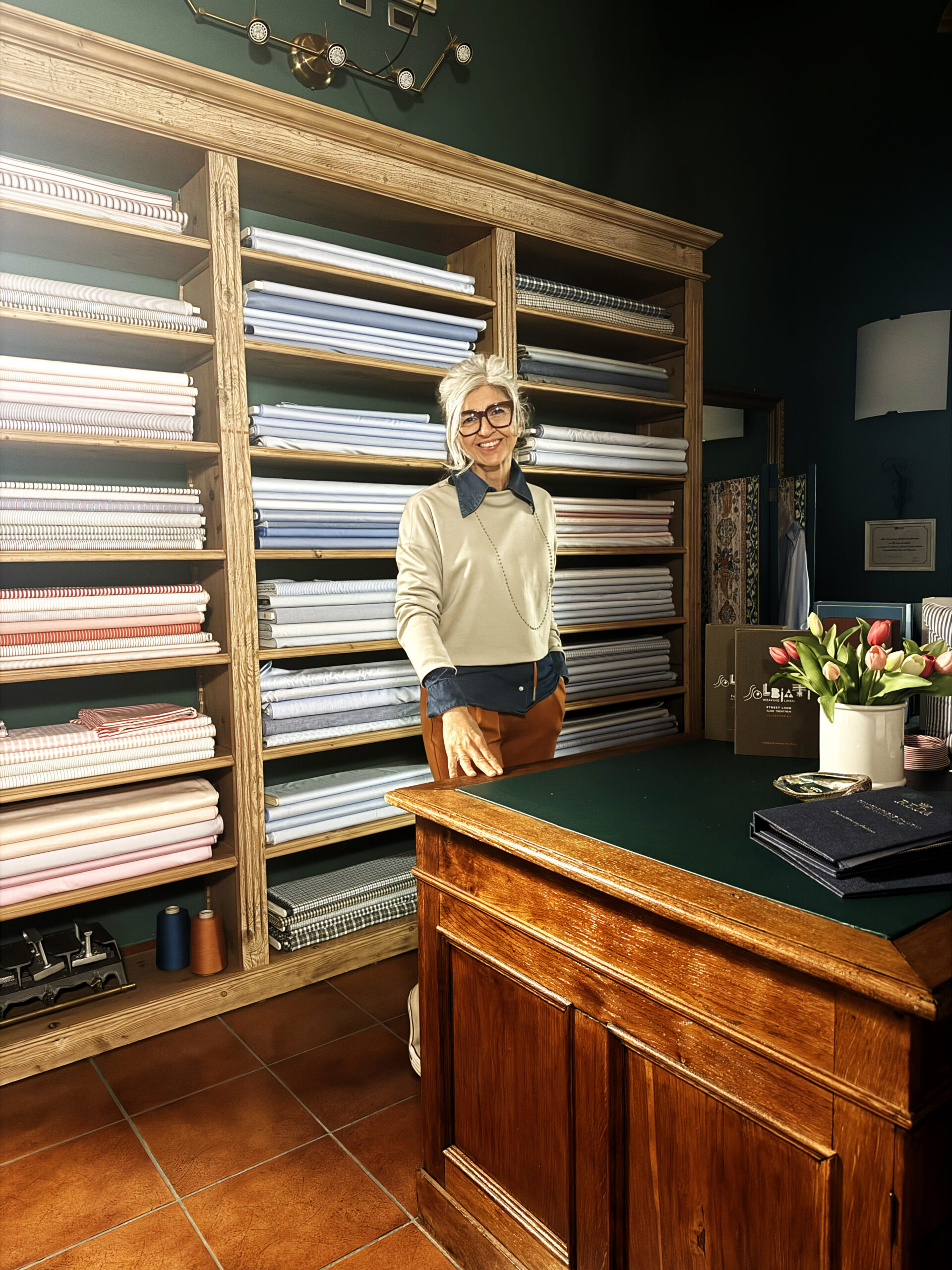
My name is Roberta Rolle and I am the owner of Camiceria Artigiana Carmen, a tailoring business in the center of Turin specializing in exclusively made-to-measure shirts for over fifty years. The shirtmaking business was founded by my mother, Carmen, who opened the first small shop in the suburbs when I was just three years old. The workshop has always been part of my daily life: I used to play with old pedal sewing machines and use fabric scraps to create small patchworks. I’ve always had a very spontaneous creativity, which grew there. Later, I graduated from the State Institute of Art for Fashion and Costume Design in Turin. At the time it was a very comprehensive school: there were traditional subjects—Italian, chemistry, mathematics, drawing—but also a lot of tailoring and a great deal of art history. There I learned to construct historical garments, starting even from fabric printing or woodwork to recreate antique shoes, or by dismantling and re-covering old umbrellas bought at Porta Palazzo. It was a very hands-on education, with skilled teachers, which taught me from a young age the value of doing things well, with patience and respect for materials. Today I carry on this activity with the same spirit with which it was born: creating garments meant to last over time and truly accompany the person who wears them. Alongside work, there is also my private life: I have been living with my partner for twenty-five years and we have two children. Every day I balance a busy professional life with an equally intense family life.
How was Camiceria Carmen founded? Who is Carmen and what idea has guided you from the beginning?
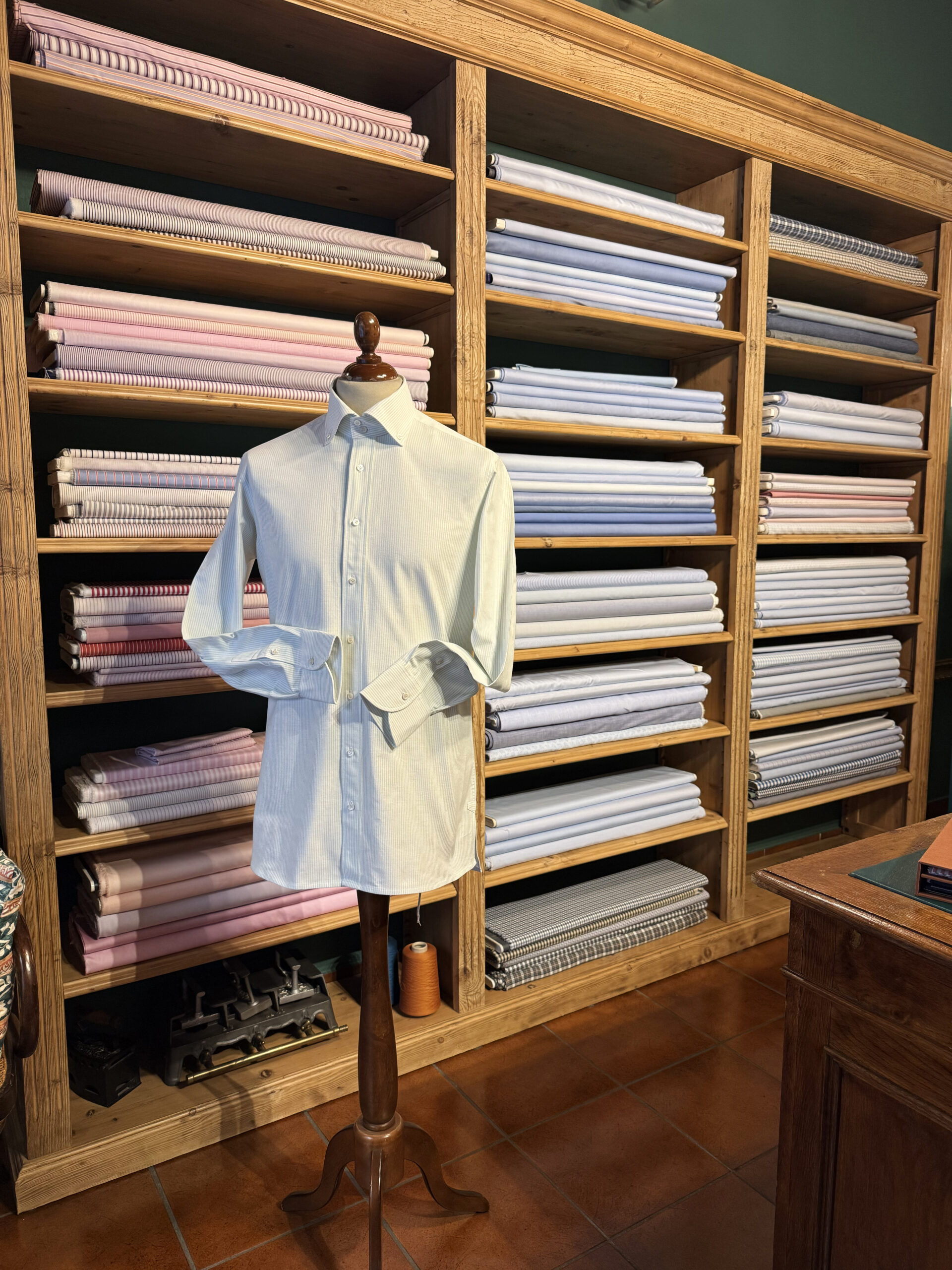
The shirtmaking business was founded fifty-one years ago by my mother, Carmen. She was only fourteen when she began learning the trade in a small workshop. After various experiences, at twenty-seven she decided to start her own business, with a very simple idea: to make shirts of the highest quality. At first, she worked almost exclusively with a local clientele, then over time word of mouth did the rest, bringing customers from all over Italy and even from abroad. The idea that has guided us has always remained the same: to put quality first. In fabrics, in construction, and in the relationship with the client. Staying focused on made-to-measure today may seem unconventional, but it is exactly what has allowed us to stand out.
50 years of excellence: what are the strengths that have brought you this far?
I believe our strengths are three. The first is continuity: even today we work with the same artisanal methods as in the past, from fabric decatizing to the creation of personal patterns, all the way to hand-sewn buttons. The second is technical expertise. In a made-to-measure shirt every detail has a purpose: nothing is random. The third is the relationship with the client. A shirt does not come from a catalogue, but from a dialogue. You need to understand how a person lives, moves, works. Only then does the garment truly become theirs.
What does it mean to you to be an artisanal business?
It means taking responsibility for what you do. Every garment carries our name. It also means working with different timelines compared to industry: timelines that allow you to control everything and, if necessary, make corrections. For me, craftsmanship is this: trying to do things better every day.
What influences—cultural, artistic, or personal—shape your aesthetic vision?
There are several influences. Certainly, Italian tailoring tradition, with its balance between elegance and naturalness. Then design and architecture, especially regarding proportions and materials. A well-made shirt, for me, must follow the same logic as a well-designed object: nothing superfluous, everything has a function. There is also a deep love for beauty, which I believe comes from being Italian and from my studies in art history. And then an important step: I started as an art director in a small advertising agency. I didn’t go straight into the workshop, and this gave me a more contemporary aesthetic and a good familiarity with digital tools. Added to all this is curiosity, which still drives me today to explore and experiment.
You are highly skilled technically: from fabric selection to garment construction, what are the key steps?
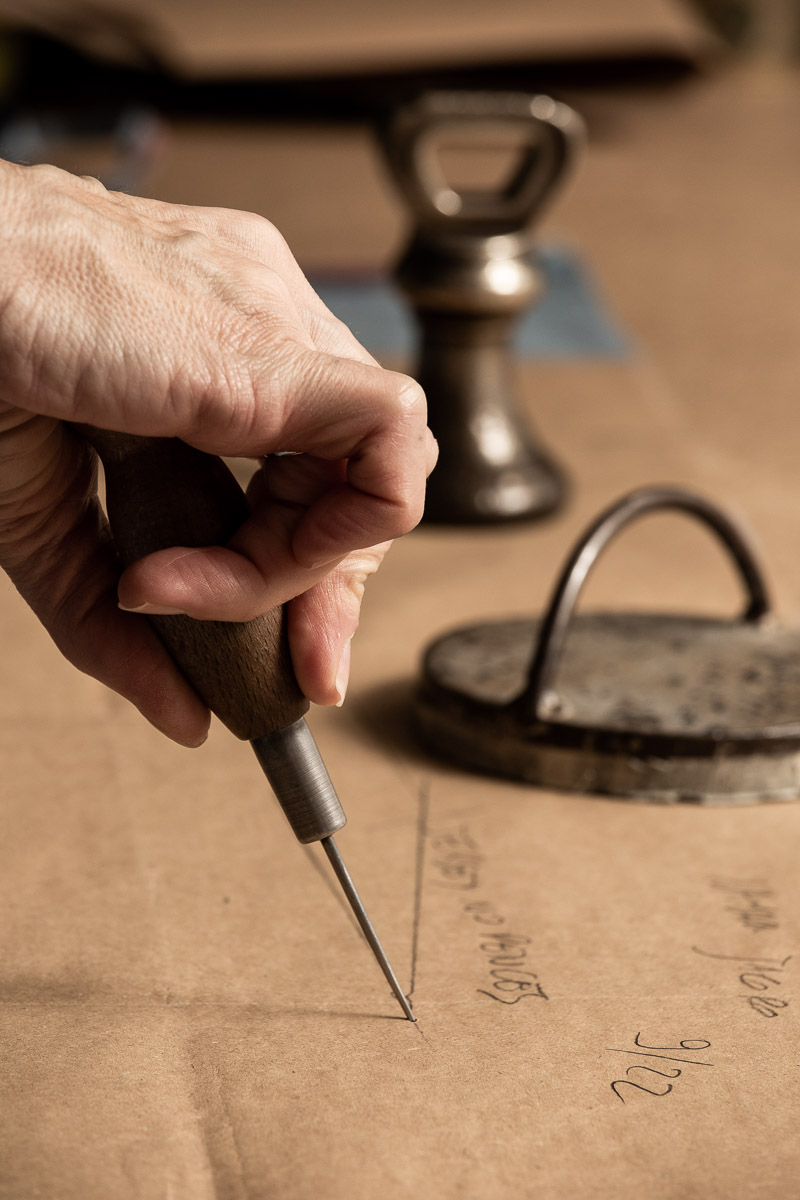
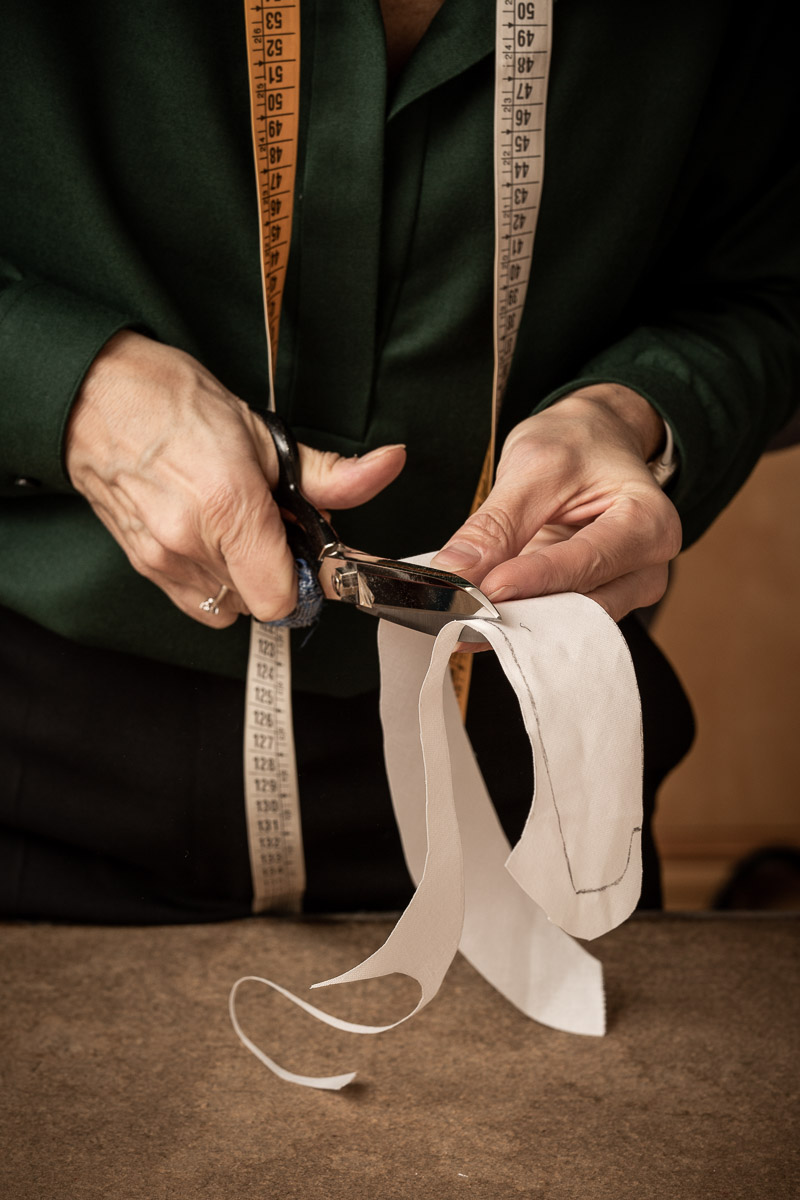
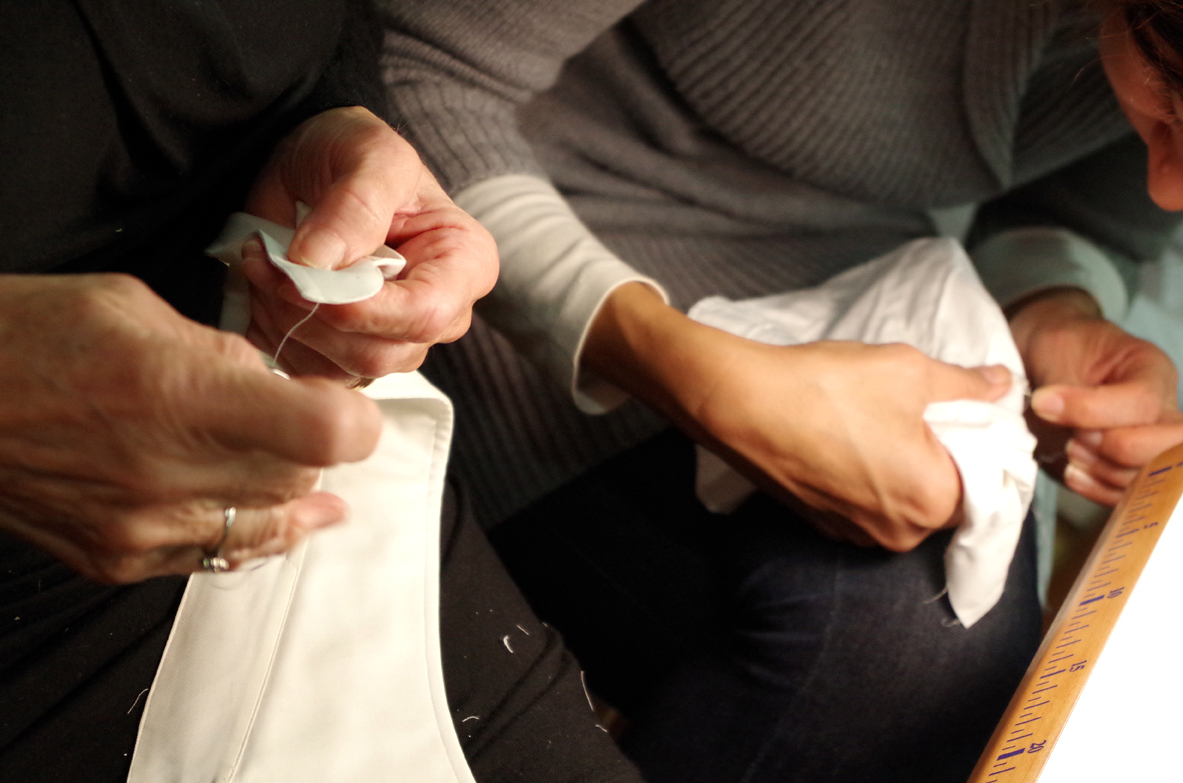
Everything starts with the fabric, which determines much of the final result. Then comes the dialogue with the client: it’s essential to understand what to truly recommend based on their daily life. Measurements are very detailed: you don’t just measure the body, you observe posture and the way a person moves. Then comes cutting and the construction of the shirt, followed by finishing. Each garment is a small challenge: you must enhance the person while ensuring comfort. I don’t like overly tight shirts—they should accompany, not restrict. Not everything has to be done by hand. To last over time, a shirt needs well-made machine stitching. However, there are manual steps that make the difference: buttonholes, buttons, and non-fused interlinings. These are the details that truly matter.
How do you communicate the value of a high-quality garment in an era dominated by fast images and social media?
By telling the process. Today everything is fast, whereas we work with slowness. Showing what lies behind a garment helps people understand its value. When customers enter the workshop, they are often surprised: everything truly originates there, before their eyes. Social media works if it is used to tell a story, not just to show.
What are your favorite fabrics and why?
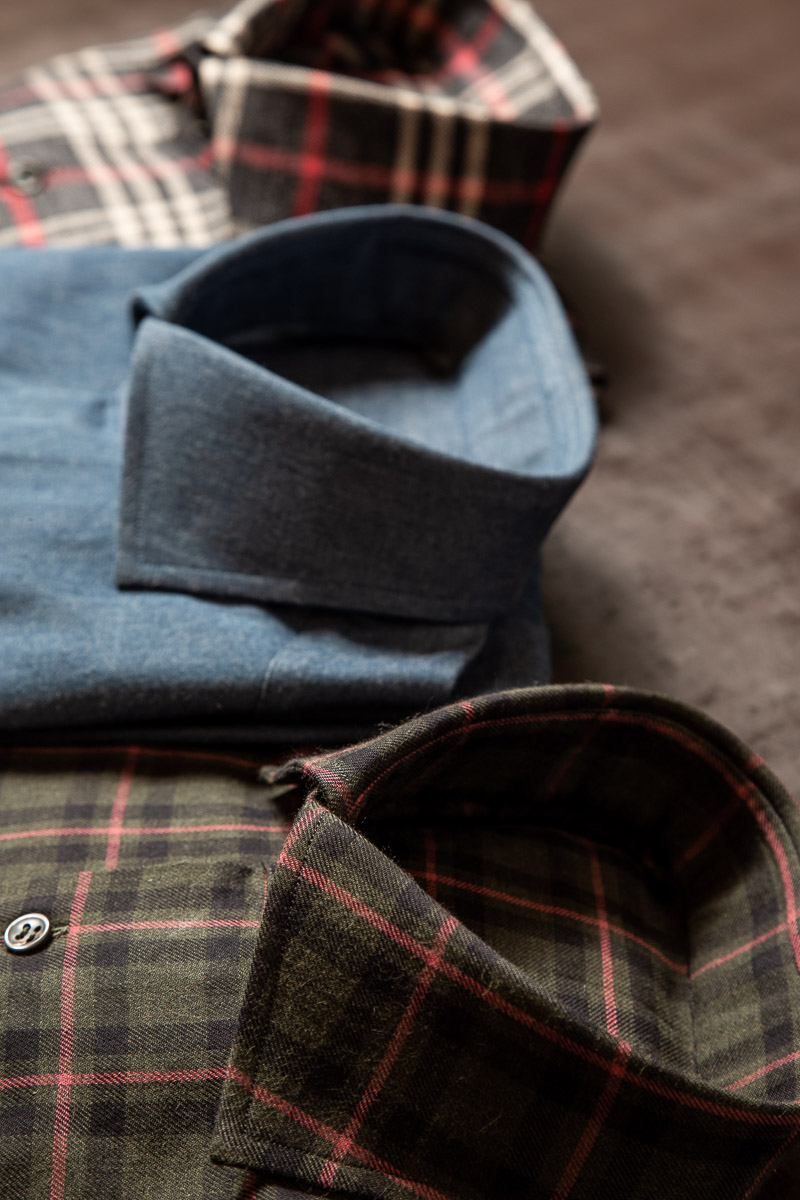
The greatest satisfaction is when a client comes back after years and asks for the same fabric. I choose fabrics with exactly this in mind. I like to study them, understand them, touch them—not just for how they feel, but for how they are constructed. Before offering them, I always test them: I want to understand how they react to washing, ironing, and wear. We have always used fabrics from Canclini and Grandi & Rubinelli. Among those I appreciate most is Canclini’s Tudorlino, a very fresh linen-cotton blend, pleasant on the skin and with remarkable durability. For winter, I find Grandi & Rubinelli’s Teddy flannel cotton very beautiful—it has a soft hand, a compact structure, and is warm and cozy. You recognize a great fabric over time: by how it drapes, how it ages, how it improves.
Today’s customer is more informed and selective: what kind of clientele looks for your product?
It is often someone who has already tried quality garments and wants something more personal. Or someone with specific needs, or simply someone who wants to wear beautiful fabrics on their skin. Many are professionals, but younger people also come, looking for something that lasts over time. It’s also interesting to see how some clients find us through digital tools like ChatGPT, even from abroad. Today people find a lot of information online, but it is not always correct. Sometimes importance is given to manual processes that are more folklore than real quality. That’s why dialogue remains essential.
Casual Moment – You are passionate about home design: tell us more…
Yes, I’ve always loved architecture. If at eighteen I had had more confidence, or perhaps better math skills—I think I may be dyscalculic :-)—I might have chosen that path. In reality, fashion and architecture have a lot in common: materials, volumes, proportions. Over the years, my partner and I have enjoyed experimenting with different materials to create objects for the home, such as lamps and paintings. Recently I also obtained a patent for a new garment, very technical and in a sense also “architectural” … but I’ll talk more about that later.